The Council · YouTube series
Ten dead thinkers arguethe old questions in person.
One existential question per episode, no host and no narrator: the ten speak for themselves. No self-help, no therapy - just thought pushed to the edge.
The Invisible Council
The ten counsellors
Each page here is an account of a life - the years, the ideas, the works. How any of them actually thinks comes out at the table, in the episodes.
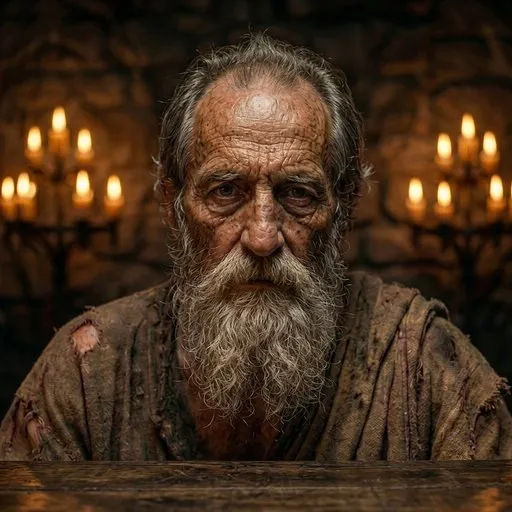 00Seat 0
Diogenes of Sinope
412 – 323 BCE
The exile who lived in a clay tub and made his own naked body the argument against civilization.
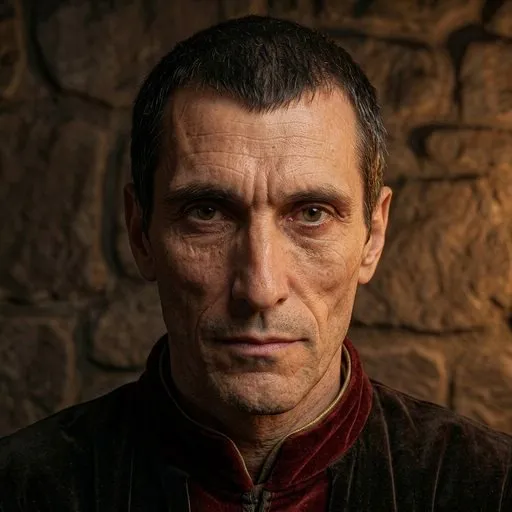 01Seat 1
Niccolò Machiavelli
1469 – 1527
The fired secretary who wrote the rules of power at night in dirty boots after farming all day.
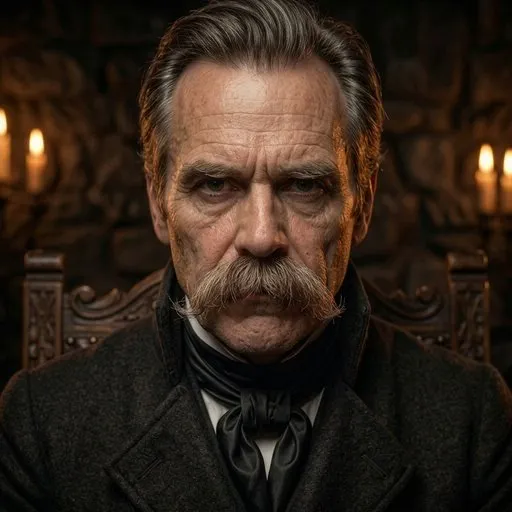 02Seat 2
Friedrich Nietzsche
1844 – 1900
The sick professor who tracked every moral rule back to an act of secret revenge.
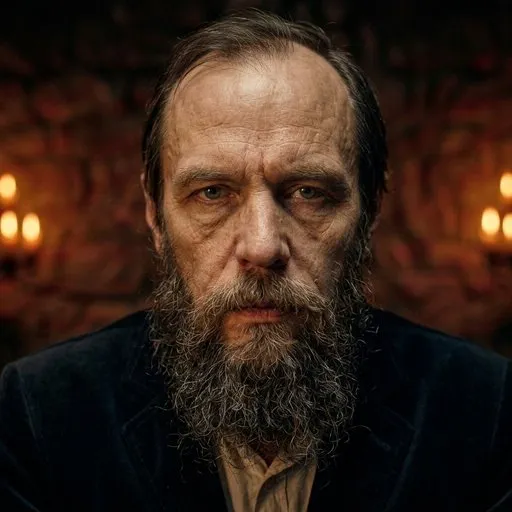 03Seat 3
Fyodor Dostoevsky
1821 – 1881
The convict who was marched out to be shot, reprieved at the post, and wrote for thirty years out of the four minutes he thought were his last.
 04Seat 4
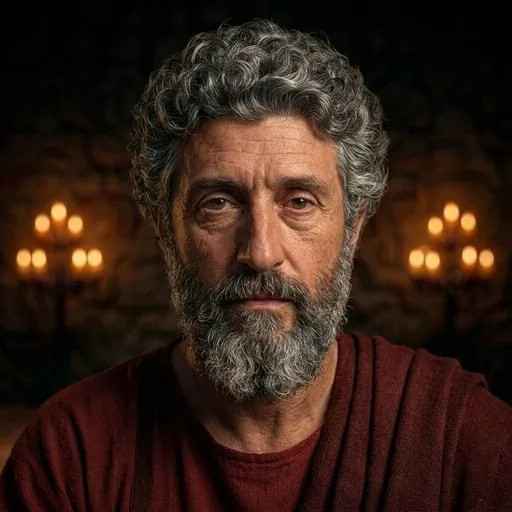
Marcus Aurelius
121 – 180
The emperor who wrote notes to himself by candlelight while dying on a freezing military frontier.
 06Seat 6
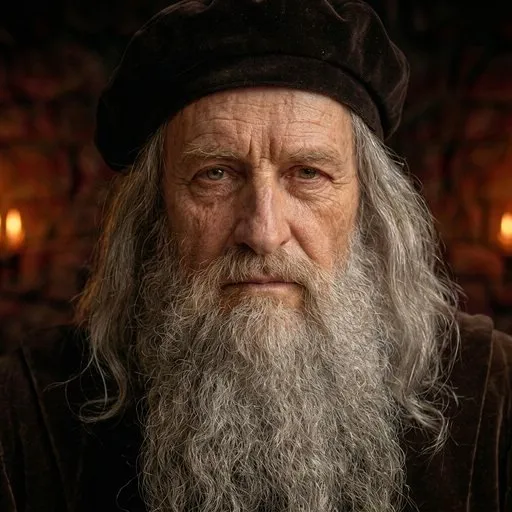
Leonardo da Vinci
1452 – 1519
The painter who left his canvases half-done while filling seven thousand pages with bones, wings, and gears.
 07Seat 7
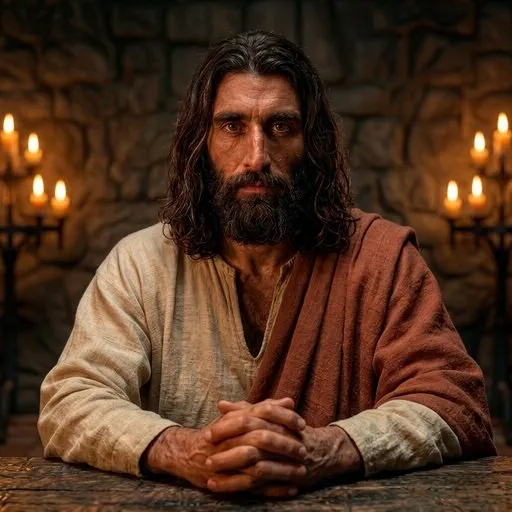
Jesus of Nazareth
4 BCE – 30 CE
The wandering teacher who wrote nothing on paper, yet split human time in two.
 08Seat 8
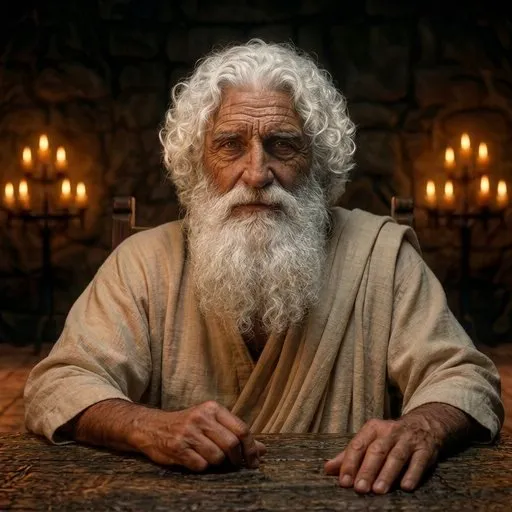
The Buddha
563 – 483 BCE
The prince who walked out of his palace at night, sat under a tree, and refused to move until the fire went out.
 09Seat 9
Plato
428 – 348 BCE
The aristocrat who spent fifty years writing books to prove that books are useless.
 10Seat 10
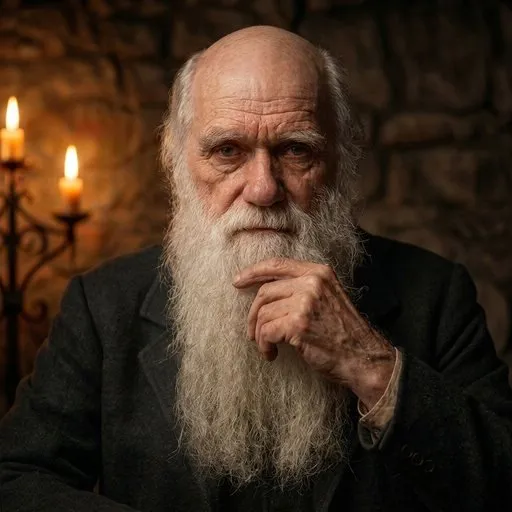
Charles Darwin
1809 – 1882
The naturalist who sat on a single manuscript for twenty years because he knew what church and family it would break.
The eleventh seat is kept for a guest.
This chair belongs to no one permanently. It waits for an outside voice, summoned for a single episode whenever a question calls for a fresh perspective to enrich the table.
The guest seatThe videos
Episodes
Each episode takes one question to the table and leaves it open. Every public one is here and on the channel. The closed ones sit behind a door that opens on request.
The first episode
13 October
One a week from then · Tuesday
The themes
The old questions
The old questions are beyond counting; the territories they fall in are not. These are the ten, and an episode takes a single, precise question out of one of them to the table.
- 01
Betrayal
What is broken when trust is broken, and whether it mends.
- 02
Death
The fact none of the ten could avoid, and what each did about it.
- 03
Desire
What wanting actually wants, and what happens when it gets it.
- 04
Envy
The friend who made it, and what the feeling is actually about.
- 05
Failure
What remains of a plan that failed, and who gets to call it that.
- 06
Fear of change
What the familiar protects, and what it quietly costs.
- 07
Guilt
What is owed after the harm is done, and to whom.
- 08
Loneliness
The difference between being alone and being left alone.
- 09
Loss
The absence that stays present, and how a life goes on beside it.
- 10
Purpose
Whether a life needs one, and what happens to a life that has none.
The difference
A new format for philosophy on YouTube
Not a lecture, not slides. The difference shows at a glance; four decisions hold it up.
- 01
Several at the table, not one
Every episode puts several counsellors on the same question at once. The result is a comparison rather than a lesson: one question, read from lives that never met.
- 02
Nobody narrates
There is no voice-over explaining what a philosopher meant. The counsellors speak in their own terms, and the thinking happens on screen instead of arriving already summarised.
- 03
No advice, and no therapy
Nothing here motivates, treats or reassures. What an episode offers is a different way of seeing how the minds of history met the questions everyone faces: envy, betrayal, meaning, death.
- 04
Plain language
The ideas are difficult; the words are not. One test decides every line: a tired listener, on headphones, follows it without going back. No jargon. Nothing to look up first.
Together, the four add up to a format YouTube does not have: philosophy alive on screen, at the speed of a conversation.
Without a face
A faceless channel?
Yes - and it could not be otherwise. Ten faces sit at this table, each with a life behind it; the author stays behind the questions, out of frame. Nothing is hidden: the room simply has a chair for a guest, and none for a host.
The author